People of TALES – Meet Marios Kouzis
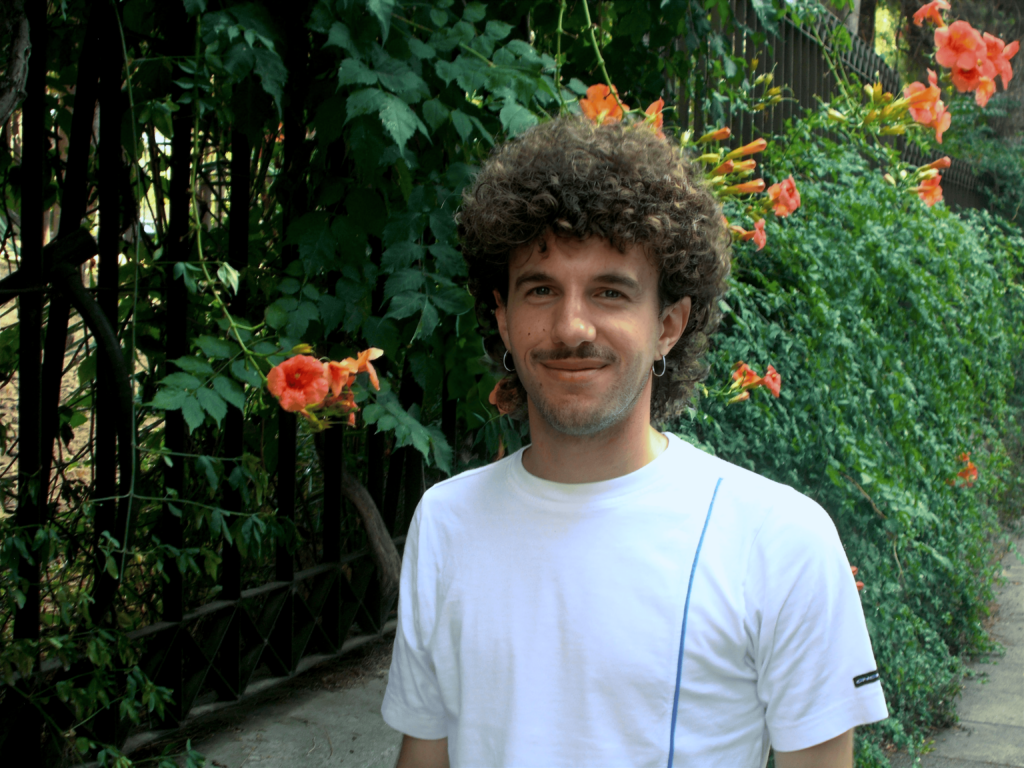
- Could you tell us a few words about your background? I’m originally from Athens, which is where I started my academic journey. My standout courses were high-energy astrophysics and plasma physics, which paved the way for my involvement in X-ray astronomy. I gained early hands-on experience through an internship at the National Observatory of Athens, studying AGN in low-redshift galaxy clusters. Later, during my Master’s, I joined the ASTRAPE project to work on the spectroscopic analysis of X-ray outbursts. After graduating, I was thrilled to join the TALES network for my PhD at the Nicolaus Copernicus Astronomical Center.
- What is the most exciting thing about your job ?
The best part is that I get to do really interesting science without being isolated in a bubble. Through activities like secondments, conferences, and training schools, I get to connect with experts in the field and continuously expand my skill set. At the end of the day, I can’t wait to apply these skills to tackle the complex problems I’ll be facing during my PhD.
- Why did you choose to become a scientist ?
It started during visits to my family’s cottage in the countryside when I was a high-school student. I slowly learned to navigate the constellations, which led me to watch videos about astrophysics. That’s what initially inspired me to study physics—purely out of deep curiosity. At the time, I didn’t necessarily link it to becoming a ‘scientist’; I think I had a very different image in my head of what that meant. However, during my undergraduate studies, I gained a realistic understanding of scientific research, and it just felt right. I learned to love the process, and following this career path became the natural next step.
- What is the main focus of your PhD project ?
To constrain the structure and physical conditions of the accretion disk, including its connection to winds and the broad line region. To do this, I am developing and testing a phenomenological multi-phase model of accretion flows, based on the assumptions of a magnetically supported disk and the equilibrium between magnetic heating and radiative cooling. This model should include temporal and dynamical properties so that it can be directly compared with X-ray, UV, and optical variability observations.
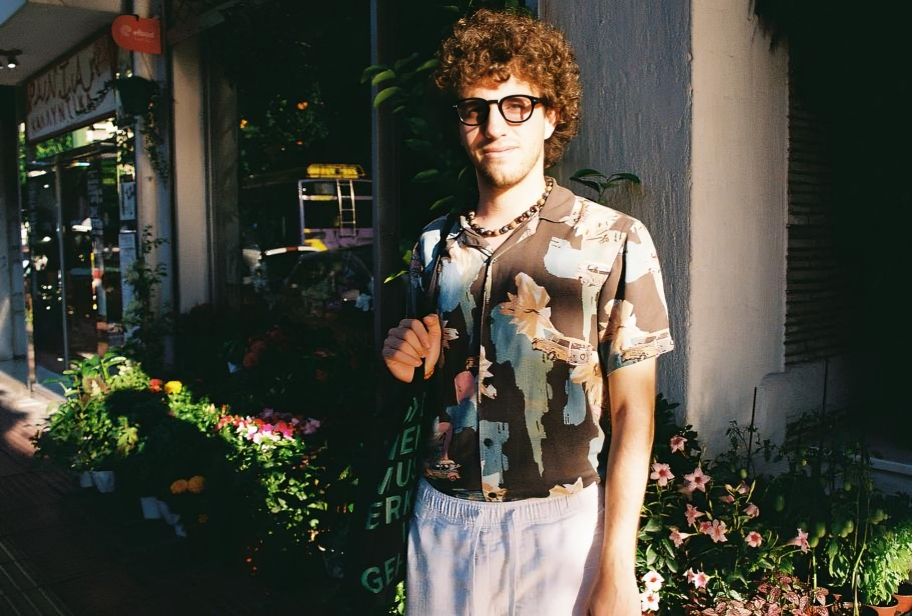
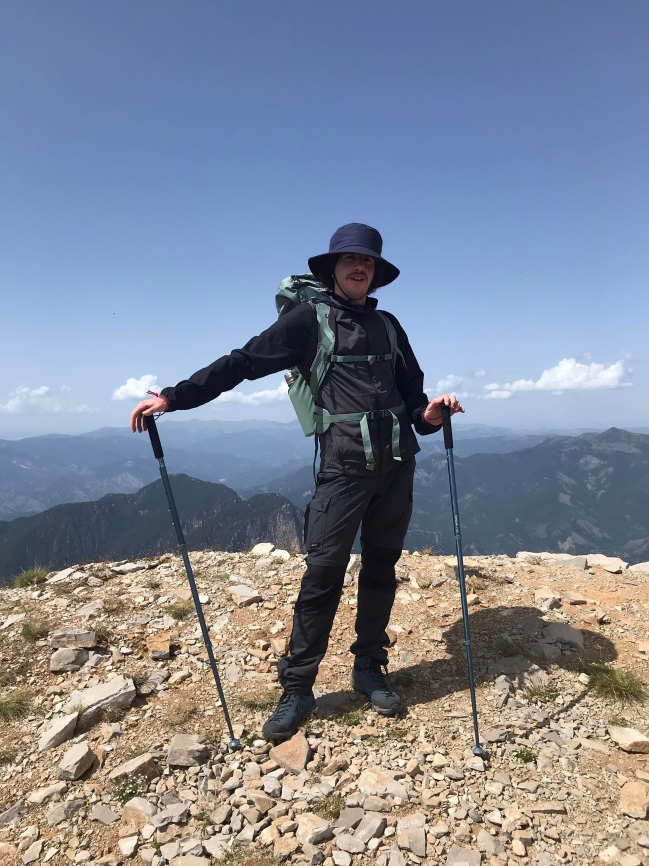
Figure Caption: (Up) Strolling around the sunny streets of Pangrati, Athens. (Right) Hiking at the highest peak of Mount Tymfi, Gamila (2497 m) in northwestern Greece.
- What do you do for fun?
I love going to the cinema—honestly, if I weren’t an astrophysicist, I’d probably be trying to become a film director! I also love getting outside and breaking a sweat, so I do a lot of hiking, biking, and running. Plus, since moving to Warsaw, I started indoor bouldering. I’ve quickly realized that doing a PhD and bouldering just naturally go together!