

People of TALES – Meet Erin Umuzigazuba
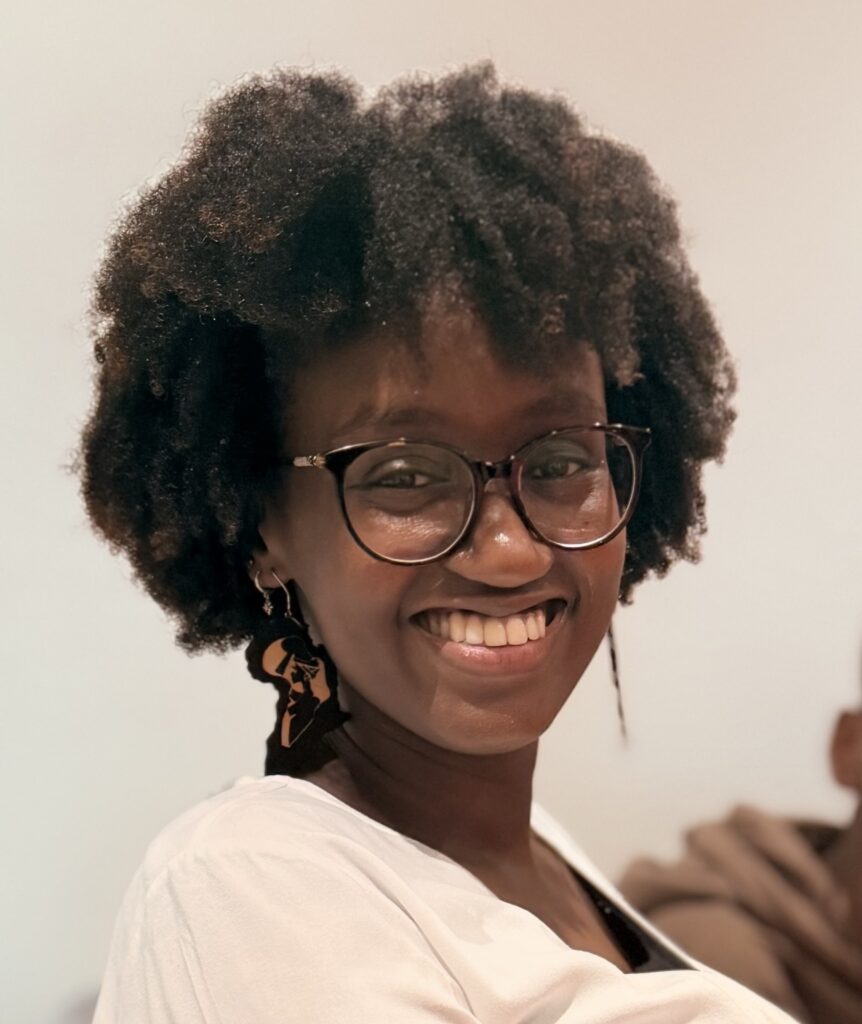
- Could you tell us a few words about your background? I grew up in a small village in the Flemish part of Belgium. I obtained a Bachelor’s degree in Physics and Astronomy at the Vrije Universiteit Brussel in Brussels, Belgium. After becoming fascinated by the intersection of astronomy and machine learning, I went on to study at Leiden University in the Netherlands, where I completed a Master’s degree in Astronomy with a specialisation in Data Science. During this time, I became interested in creating machine learning methods to identify rare astronomical events, which is fortunately exactly what I get to do in my current PhD project at the University of Nova Gorica in Slovenia.
- What is the most exciting thing about your job ? Through my PhD project I am a member of the Vera C. Rubin Observatory’s Legacy Survey of Space and Time (LSST) Science Collaboration. It feels incredible to contribute to such a large and complex international collaboration. An unexpected but extremely exciting thing about my job is getting to meet extraordinary people and work with them. I am constantly amazed by the different ways people approach problems, and I enjoy working together to find solutions. I am grateful to my supervisor for creating a safe environment where we can discuss ideas, ask questions and grow as researchers.
- Why did you choose to become a scientist ? My parents are real science enthusiasts and encouraged my siblings and me to pursue scientific interests from an early age. However, I did not know what I wanted to do until the final months of high school. That changed when my geology teacher showed us an episode of “Cosmos: A Spacetime Odyssey”. I was immediately hooked. I went home, started watching videos about astronomy, and realised that this was what I wanted to do in the future.
- What is the main focus of your PhD project ?
I study tidal disruption events (TDEs), unique astrophysical phenomena in which stars are ripped apart when they pass too close to a black hole. I focus on TDEs observed in optical light by the Rubin Observatory. I am currently developing machine-learning-based algorithms to identify these events. The goal is to create a sample of high-confidence, photometrically detected TDEs and significantly increase the number of known optical TDEs. Using this sample, we can improve our understanding of the properties and dynamics of both disrupting black holes and disrupted stars.
- What do you do for fun? In my free time, I enjoy crafts such as knitting, crocheting, and sewing, as well as baking and reading. I also enjoy cycling and traveling around Europe with my siblings.
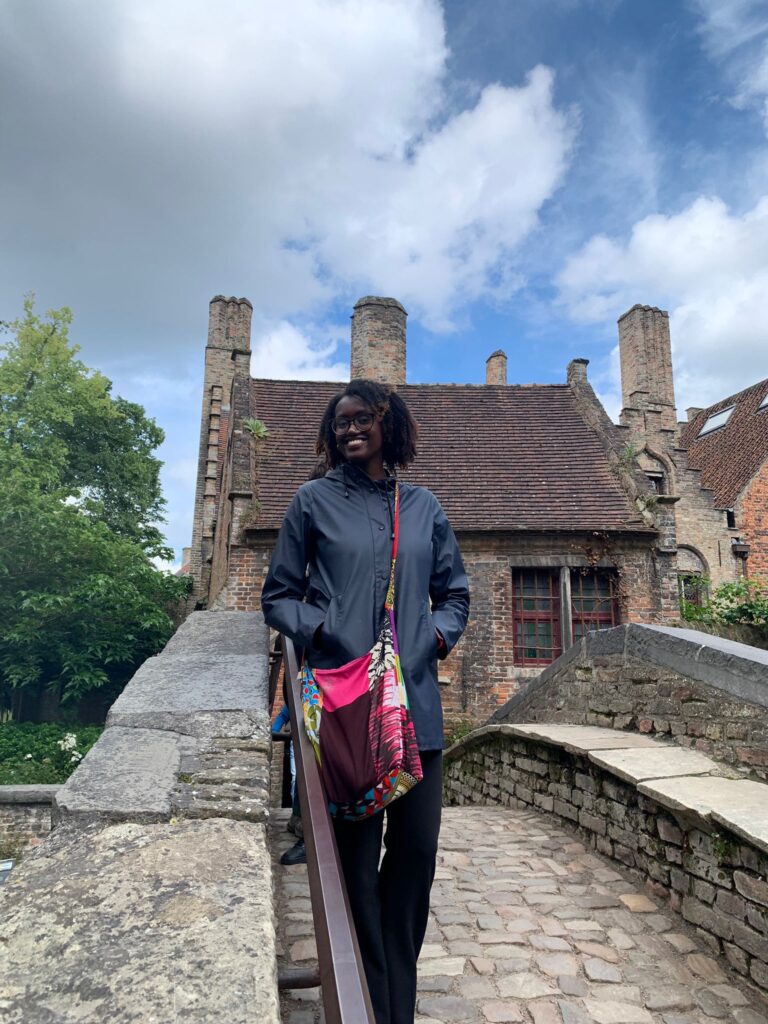
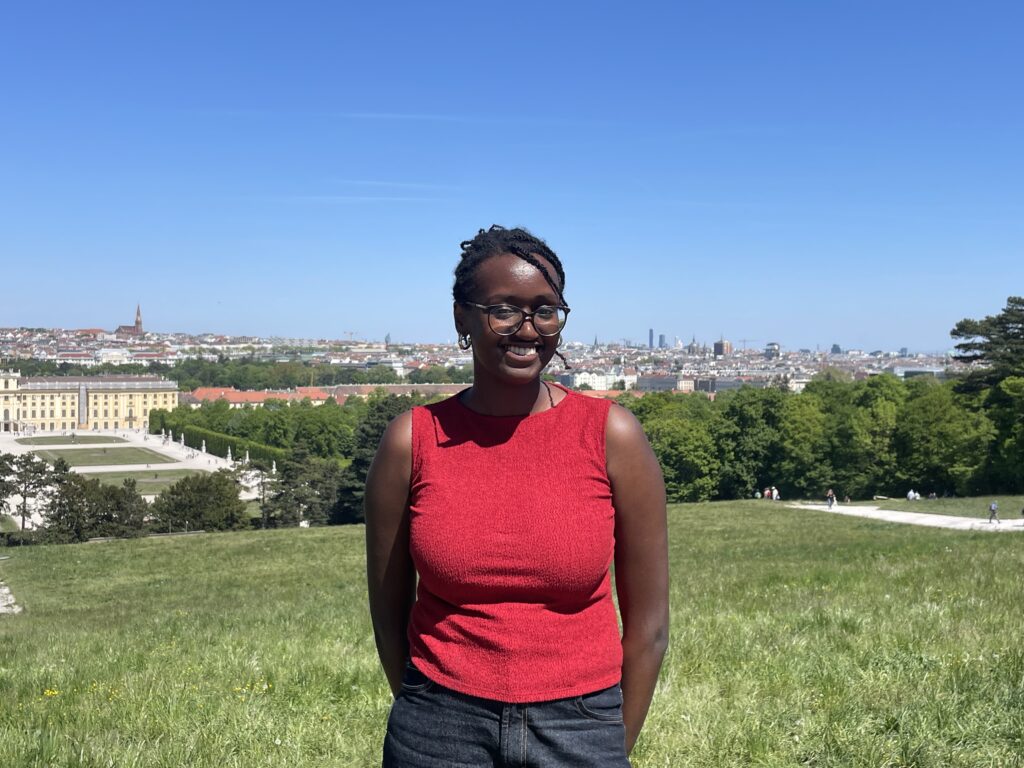
Figure Caption: Erin (left) visiting the historical buildings and canals of Bruges in Belgium and (up) exploring the Schönbrunn palace and gardens in Vienna, Austria.

